
'Similar to the case of the digital payment system where the government created a public platform and others joined in, we are exploring a similar structure to create a PPP platform where the compute required for AI could be accessed by the small player.'
Mining mogul Anil Agarwal-led Vedanta Resources' credit profile will unlikely be weighed down by the group's planned Rs 1.54 lakh crore foray into semiconductor manufacturing, S&P Global Ratings said on Monday. "This is because the company has reiterated that the $20 billion related investment will be carried out outside of Vedanta Resources. "The business will be undertaken in a separate entity under Vedanta Resources' holding company Volcan Investments Ltd," it said.

The government is currently also revising its MSIPS policy to extend its mandate apart from making it more investor friendly.

A day ahead of the interim Budget, India slashed import duty on spare parts, like battery cover, lens and SIM socket, used in mobile phone manufacturing to 10 per cent, from 15 per cent. The duty cut is aimed at boosting local production and exports, as well as reducing prices in local markets. The finance ministry on January 30, notified the cut in duty on all goods for use in manufacture of cellular mobile phones to 10 per cent.

Exporters on Thursday sought a fund of Rs 750 crore for three years to tap USD 25 billion export potential in the US, aiming to seize potential opportunities that may arise as the US President-elect, Donald Trump, has threatened to impose high tariffs on Chinese goods. In its pre-Budget meeting with the finance ministry, Federation of Indian Export Organisations (FIEO) President Ashwani Kumar has also demanded extension of the five per cent Interest Equalisation Scheme (IES).

'The shifts in US involvement in global conflicts and geopolitical alliances could introduce uncertainties.'

Prime Minister Narendra Modi urged CEOs of US majors to take advantage of India's growth story as the country is making all efforts to become the third largest economy of the world in his third term. India is currently the fifth largest economy of the world after the US, China, Germany and Japan with a GDP of around $3.9 trillion. India has been the fastest growing large economies of the world with GDP growth rate of over 7 per cent for the last three consecutive years.

Ratan Tata was one of the world's most influential industrialists yet he never appeared on any list of billionaires. He controlled over 30 companies that operated in over 100 countries across six continents yet lived an unpretentious life. Ratan Naval Tata, who died at a Mumbai hospital on Wednesday night at the age of 86 years, enjoyed a perhaps unique status -- a corporate titan who was considered a 'secular living saint' with a reputation for decency and integrity.

One of Apple's suppliers, Salcomp, will invest Rs 2,000 crore over the next five years to make components at a Nokia plant in Chennai. The facility, which has been closed for nearly 10 years, will be revived and made operational from March 2020.
The Galwan clash occurred six months after the Doklam disengagement and two high-profile meetings. India should not be caught by surprise once again, asserts former foreign secretary Shyam Saran.

... catch up with Blinkit, Swiggy Instamart and Zepto...
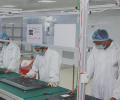
Dixon Technologies' January-March quarter (Q4) results came in well below expectations, but the potential for signing up a new mobile client, and plans for backward integration into display manufacturing kept investors happy. Dixon's Q4FY24 revenue grew 52 per cent year-on-year (Y-o-Y) to Rs 4,660 crore, below Street consensus, due to weakness in consumer electronics (Rs 890 crore) and home appliances (Rs 294 crore) segments.
The Union Cabinet on Wednesday approved a Rs 76,000 crore policy boost for semiconductor and display manufacturing ecosystem in the country in an bid to position India as a global hub for hi-tech production. Announcing the decision of the Cabinet, IT and Telecom Minister Ashwini Vaishnaw observed that electronics plays an important role in everyday life, and semiconductor chips forms a crucial part of electronics. Outlining the details of the scheme, he said the Rs 76,000 crore programme has been approved for the development of semiconductors and display manufacturing ecosystem.
India's overall imports from Taiwan during April-February rose by 34 per cent to $7.5 billion.

Recently, Prime Minister Narendra Modi met over 40 CEOs across broad swathes of industry, ranging from makers of mobile devices, auto components, food products to telecom networking equipment and pharmaceuticals. The agenda: To discuss how to make India an integral part of the global supply chain. The focus of the discussion would be the much touted yet not so well understood production-linked incentive scheme (PLI), the centrepiece of the government's drive to massively boost the manufacturing sector. To do so, the government has created a war chest of over Rs 197,000 crore to be paid out as incentives to over 14 industries in five years. There are three objectives to the scheme, two explicitly stated, one implied.

Docking technology is crucial for sending people and cargo to space stations.

If reports that Apple Inc plans to triple its iPhone production in India come true, it is likely to help the country become a supply hub for the American company. There are some 190 Apple suppliers globally, but only 12 have manufacturing facilities in India now. Apple's strategy is to focus on India and a clutch of other countries as it diversifies its supply chain out of China.

To enhance transparency and verifiability in the poll process, the Conduct of Election Rules, 1961 were amended in 2013 to introduce the use of VVPAT machines. They were first used in the by-election to the Noksen assembly seat in Nagaland.

Reliance Industries Ltd, India's most valuable company, is back on a growth path after six months of challenges as it posted better than expected earnings in the December quarter, brokerages said.

'These machines are standalone devices with no external connectivity, making hacking impossible. The chip in EVMs is one-time programmable, ensuring no changes can be made. Strict security and administrative protocols further prevent any tampering'

Overall, the budgetis positive for the Consumer Durables & Electronics Industry.

Chip giant Qualcomm chief executive Cristiano R Amon and billionaire Gautam Adani on Monday discussed role of AI, semiconductors and edge appliances across markets in the fast changing global technology space. The two leaders met in Mumbai on Monday morning to discuss India's potential around semiconductors, AI and mobility, according to a social media post by Adani. While Qualcomm is big on designing and manufacturing semiconductors and wireless telecommunications products, Adani group had in 2022 bought a small quantity of fifth generation or 5G spectrum for private captive network deployment in ports, logistics and power generation among others.

"Look at the policies of world around, we are far less protectionist than any other country in the world. There is no question of India becoming protectionist," Indian Telecom Minister Kapil Sibal said here on Monday.

Adani group will invest more than $100 billion (around Rs 8,340 crore) in energy transition projects and manufacturing capability to produce every major component required for green energy generation, its chairman said on Wednesday. Besides building solar parks to produce electricity from sunlight and wind farms that do the same from wind, the conglomerate is building major facilities to manufacture electrolyzers for making green hydrogen, wind power turbines and solar panels.

Electronic equipment production in India will touch $32 billion in 2011, a compound growth rate of 18 per cent from the $14 billion in 2006, according to Gartner.

Gautam Adani, India's second-richest man, and seven others including his nephew Sagar have been charged with paying bribes to unidentified officials of state governments in Andhra Pradesh and Odisha to buy expensive solar power, potentially earning more than $2 billion profit over 20 years.

Tata Group is in discussions with some major international companies, including those from Taiwan, for its foray into the semiconductor chip business. The Union government had earlier tried to bring in Taiwanese manufacturers Taiwan Semiconductor Manufacturing Company (TSMC) and United Microelectronics Corporation (UMC) for chip manufacturing in India. A person close to the development said the Tatas have now opened a separate channel for a possible tie-up. Currently, India mostly imports chips, which are fabricated and assembled to put into various applications, including automobiles, renewable power, mobile phones, televisions, and other electronic items.

Flash Electronics alleges Royal Enfield infringed its patent on regulator rectifier device.

HAL's sustained, long-term income will come from the design, development, manufacture, overhaul, and upgrade of a family of helicopters designed for deployment on India's 21,000-foot-high Himalayan frontier with Pakistan and China.

'I think some of us, like Mukesh Ambani, myself and those of us who head industrial units, ought to really focus on what we can really do to make the world a safer place, maybe 50 or 100 years from now.' 'For instance, how can we deal with climate change and global warming, right now?' 'The effects of it may not be felt now; in fact, we may pay a price for it today, but it will help the generations to follow.'
Dixon Technologies right now is a beehive of activity. It is building a new facility in Noida to make 1.3 million laptops for Taiwanese PC maker Acer. The facility must be up and running in four months. The pace of activity will only increase. Last week Dixon won a similar contract from Lenovo, the Chinese personal computer maker and the third largest information technology (IT) hardware brand in India, to assemble laptops and notebooks. Though the clientele in these two cases is Taiwanese and Chinese, Dixon is a company reaching for the stars with its feet planted firmly in the Indian government's policy.

The government is busy strategising ways to revive the domestic mobile device industry as Chinese firms have grabbed a large chunk of the handset market. The idea is to minimise competition from Chinese mobile players in the entry level or sub-Rs 10,000 category, according to a senior government official familiar with the plans. While discussions on the strategy are on, there's a growing consensus within the government that the lower end of the market should be reserved only for the domestic players, the official said.

In March 2021, Ola Electric founder Bhavish Aggarwal was seen surveying an empty 500-acre land surrounded by shoe factories, temples, bakery shops, coconut trees and dusty roads in Pochampalli town of Krishnagiri district, Tamil Nadu. Many excavators and workers were busy at the construction site to build the Ola Futurefactory for electric vehicles.

'If you are watching cricket and don't want to leave the screen, you could check the menu and order through Zomato (or any other app) from a small part of your screen. That is what we are working towards.'
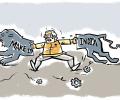
The Department for Promotion of Industry and Internal Trade (DPIIT) has proposed to raise the minimum local content under public procurement order in government contracts. But several local suppliers and multinational companies (MNCs) are saying such a steep target is not attainable. Class-I suppliers, whose goods, services or works offered for procurement has local content equal to or more than 50 per cent may see it hiked to 70 per cent, while it may go up to 50 per cent from 20 per cent for Class-II suppliers.

The proposed exemption in customs duty on import of lithium, cobalt and other rare minerals in the Union Budget 2024-25 is likely to lower the battery production cost and help in making electric vehicles more affordable for the buyers, auto industry leaders said on Tuesday.

'Domestic investors are opening up to the idea of high-growth Internet companies as a pool of value creation.' 'They like the execution that they see with Zepto, and for us, that is the most important factor.'

Bureau has registered just one product so far despite 1,500 applications.

Electronic hardware is going to be the next big thing following the success story of software sector, which now contributes eight per cent to the gross domestic product, besides providing jobs to 2.9 million people.
